Freeze Frame: The Forgotten Wisdom Hidden Inside the Pause Button
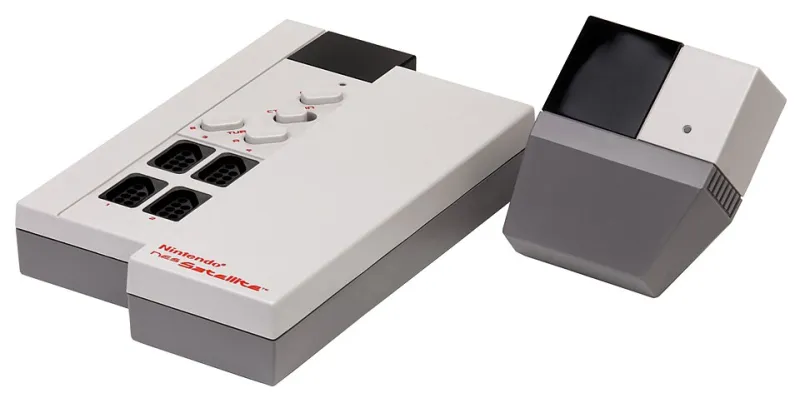
Photo: Evan-Amos, Public domain, via Wikimedia Commons
Picture this: it's 1988, you're three worlds deep into something punishing on the NES, your mom is calling you for dinner, and you hit that little rectangular button on the controller. The screen freezes. The music cuts out. The world holds its breath. Nothing advances. Nothing punishes you for the interruption. The game simply... waits.
It sounds almost too simple to talk about. But sit with it for a second, because that moment — that humble, pixelated pause — encoded something we've almost entirely lost in how we think about time, rest, and the relentless pressure to keep moving forward.
A Button That Said "You're Allowed to Stop"
Retro games didn't have cloud saves. They didn't have passive income systems quietly ticking in the background while you slept. They didn't send push notifications when your crops were ready to harvest or when a limited-time event was about to expire. When you paused, the universe paused with you. No penalty. No anxiety. No FOMO baked into the mechanics.
That's a kind of design philosophy that's almost countercultural by today's standards.
Think about what the pause button actually communicated to the player: Your life outside this screen matters. The game will be here when you get back. You are not a resource the system needs to extract value from right now. For a medium that's often accused of being addictive by design, those early games had a weirdly respectful relationship with the player's autonomy. The pause wasn't just a convenience feature — it was a silent acknowledgment that you existed beyond the cartridge.
The Always-On Trap We Walked Into
Fast forward to now. Modern live-service games — your Fortnites, your Destiny 2s, your mobile gacha machines — are architecturally hostile to the pause. Daily login bonuses punish absence. Battle passes expire. Limited-time events create artificial urgency. Even single-player games increasingly blur the line, nudging you toward online leaderboards, timed challenges, and seasonal content that evaporates if you step away too long.
The game no longer waits for you. You wait for the game.
And here's the thing: that design philosophy didn't stay in the gaming world. It leaked into everything. Your work Slack has a green dot that signals availability. Your email inbox refills the moment you clear it. Social media algorithms reward posting frequency over posting quality. Productivity apps gamify your task list with streaks that reset if you dare take a Sunday off. The entire architecture of modern digital life is built on the premise that pausing is a form of falling behind.
We didn't just lose the pause button in our games. We lost it in our lives.
What Philosophy Actually Says About Stopping
Here's where it gets interesting. The idea that rest is not laziness — that stopping is sometimes the most intentional thing a person can do — isn't new. The ancient Greeks had scholē, a concept often mistranslated as "leisure" but which really meant something closer to "liberated time" — time freed from obligation specifically so the mind could engage with higher things. The Stoics wrote extensively about stepping back from action to examine it. Buddhist traditions built entire contemplative practices around the radical act of non-doing.
Even in American culture, before hustle mythology swallowed everything whole, there was a deep tradition of the Sabbath — the idea that one day in seven should be structurally protected from productivity. Not because you'd earned it. Because rest was understood as intrinsically valuable, not just instrumentally useful for making you more productive later.
The pause button, in its pixelated way, was carrying all of that forward. It was saying: the forward momentum of this world is not more important than your presence in your own life.
The Tyranny of Forward Momentum
There's a psychological concept worth naming here: what researchers sometimes call "action bias" — the deeply human tendency to feel that doing something, anything, is better than doing nothing, even when doing nothing is objectively the smarter call. Goalkeepers diving on penalty kicks they should stand still for. Investors trading when they should hold. Managers micromanaging when they should step back.
Modern game design — and modern productivity culture — weaponizes that bias. It creates systems where the cost of pausing feels enormous, even when it isn't. The battle pass doesn't actually disappear if you miss a day. Your inbox will still be there Monday. The Slack message can wait. But the anxiety is real, even if the stakes aren't.
Those 8-bit games had no mechanism to manufacture that anxiety. When you hit pause, the world genuinely stopped. There was no cost. And in that cost-free stillness, there was an implicit lesson: the world does not end when you stop pushing.
Reclaiming the Pause
So what do we actually do with this? It's not like we can collectively opt out of always-online life. The infrastructure is too deep, the economic incentives too strong, the habits too entrenched.
But maybe the first move is just naming what was lost. Recognizing that the pause button wasn't a primitive limitation of older technology — it was, in a weird way, a more sophisticated relationship with human time than most of what replaced it. Those designers (often by necessity, not philosophy) built games that respected the boundary between the game-world and your world. That boundary has since been deliberately eroded, and we should be clear-eyed about why: because an anxious player is a spending player.
The second move might be building your own pause buttons back in. Not as a productivity hack. Not as a way to come back recharged and more efficient. But as an end in itself. Because you're a person, not a resource. Because presence — actual, unhurried presence in your own life — is not a reward you earn after you've optimized everything else.
Somewhere in a flickering CRT glow, a little sprite is frozen mid-jump, waiting patiently for you to come back. The game isn't angry. The game isn't penalizing you. The game is just... there.
Turns out, that was the whole lesson.