Five shades of green: lessons in scarcity from a handheld that ran on AAs
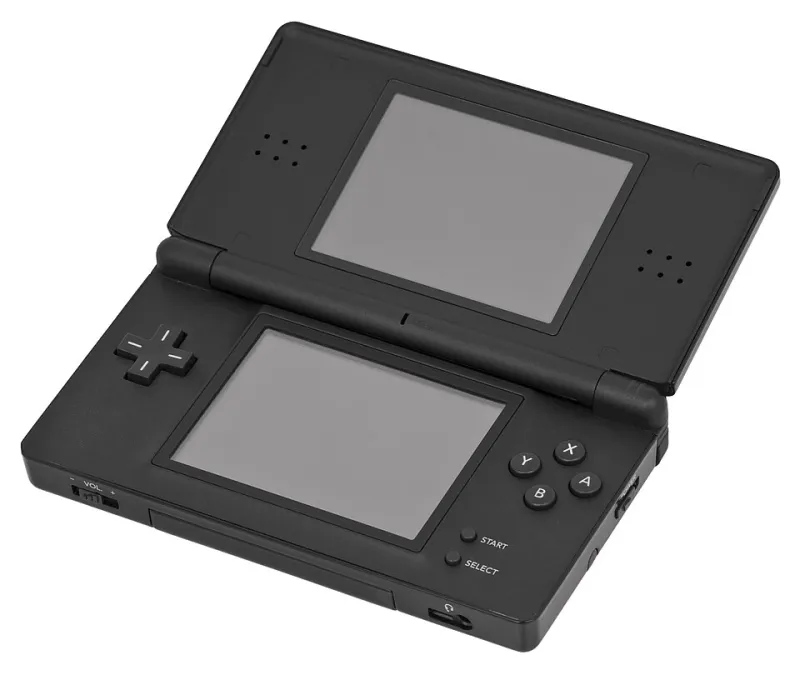
Photo: Evan-Amos, CC BY-SA 3.0, via Wikimedia Commons
Somewhere in a drawer in millions of American homes, there's a gray brick of a handheld that still might turn on if you fed it fresh batteries. The original Game Boy was, by any technical measure, worse than its competition. Worse screen. Worse sound. Worse colors — because it barely had any.
And it won. Utterly, completely won. Which raises a question worth sitting with: how did the weakest machine on the shelf become the most beloved? The answer, I'd argue, is that its limitations weren't obstacles. They were the design.
1. Constraint is a creative engine, not a cage
The Game Boy displayed four shades of green-gray, and that palette became an aesthetic. Developers couldn't rely on visual spectacle, so they leaned on silhouette, rhythm, and mood. Link's Awakening feels like a dream precisely because its foggy palette looks like one. Composers squeezed entire orchestras out of four audio channels and produced music people still hum decades later.
The takeaway: creativity doesn't flourish in infinite possibility. It flourishes when the walls are close enough to push against. If you're waiting for unlimited resources to start your thing, you're waiting wrong. Give yourself the four-shade rule and watch what happens.
2. Small screens teach big focus
That screen was tiny — a couple of inches, no backlight, best viewed under a lamp or by the window. You couldn't glance at it across the room. Playing demanded proximity and attention. The Game Boy wasn't something you had on in the background. It was the whole room.
There's a word for what that handheld was quietly training: presence. We now pay for apps that promise to give us back our focus, one subscription at a time. The brick just handed it to you, one session at a time, as long as the light was decent.
3. Scarcity makes moments matter
Battery life was a resource you could feel. Six AAs gave you roughly a dozen hours, and every kid knew the panic of the power light dimming during a boss fight. There were no chargers in every outlet, no cloud saves, no resume-wherever. When you played, you played with intention, because playtime was finite and you'd have to earn the next batch.
Contrast that with today's infinite-scroll abundance, where nothing ends and therefore nothing feels precious. The scarcity didn't make the Game Boy worse. It made every session count — a small lesson in how limits, not abundance, create value.
4. Durability is a kind of honesty
The stories are true: Game Boys survived Gulf Wars, basement floods, and being run over by cars. There was no delicate glass front begging for a case. It was built like a lunchbox because it had to be.
There's something refreshing about an object that doesn't pretend to be fragile. We live surrounded by devices we're afraid to drop, protected by plans we pay monthly for. The brick offers a different relationship with your stuff: own things that expect to be used, and stop organizing your life around the fear of scratching them.
5. Contentment is a skill, not a circumstance
Here's the deepest one. Kids in 1989 had objectively less — less detail, less speed, less color, less of everything — and they were not less happy playing. Fun, it turns out, was never downstream of fidelity. It came from the challenge, the mystery, the little green world that fit in your hands on a road trip to Grandma's.
That's a hard word for a culture that treats upgrading as a personality. The Game Boy suggests that satisfaction has less to do with what you have and more to do with what you do with it. More wasn't the point. Enough was the point.
The old brick is still sitting in that drawer, patient as ever. Maybe dig it out. Feed it some AAs. See what a smaller world feels like.