Hand Me the Controller, Trust Me With the Run: The Forgotten Vulnerability of Shared Screens
Photo: FreeMediaKid!, CC BY-SA 4.0, via Wikimedia Commons
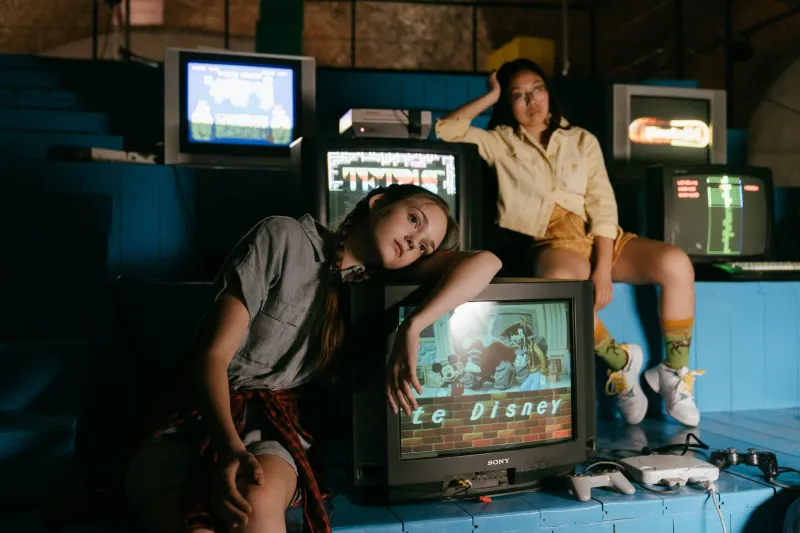
There's a moment everyone who grew up in the '80s or early '90s remembers: the controller, warm from someone else's hands, being passed to you mid-run. Not at a checkpoint. Not at the start of the level. Right in the middle of it, with two lives left and Bowser's bridge somewhere ahead.
Nobody called that trust. We didn't have the vocabulary. But that's exactly what it was — an act of small, daily vulnerability performed on shag carpet in front of a tube TV, long before anyone wrote a think piece about psychological safety.
The Hot Seat Was a Trust Fall
Co-op in the 8-bit era was often a lie. Contra let two players share the screen, sure, but plenty of games ran a strict economy: one controller, one turn, one shared pool of lives. You died, your turn ended, and the person next to you inherited whatever mess you'd made of the level.
That inheritance was the whole point.
When you handed the pad to your cousin on Thanksgiving, you were handing over consequences. Your mistakes became their obstacles. Their skill — or panic — determined whether your progress survived. It was a trust fall where the catch was never guaranteed, and the person catching you was usually eating a Hot Pocket.
Compare that to modern online multiplayer, where your teammate is a username, a ping number, possibly a bot. The stakes have been outsourced to a leaderboard. You can mute them, block them, queue-dodge them. There's no vulnerability in that, because there's no continuity of consequence. When the match ends, the relationship evaporates.
Shared Lives, Shared Fates
The genius of the shared-score co-op model — think Bubble Bobble, or the two-player mode of countless arcade ports — is that it made your friend's failure your problem. If they hoarded power-ups, you felt it. If they fed themselves to the first Goomba they saw, the whole run got shorter.
It was a crash course in something philosophers like to call interdependence, though on the carpet it sounded more like "STOP STEALING MY MUSHROOM."
That friction mattered. You learned to read the person next to you. When to hand off. When to ask for help. When your little brother was about to do something catastrophic and it was worth pausing the game to negotiate. These were negotiation skills, empathy drills, micro-lessons in stakeholder management — delivered via a D-pad.
What We Outsourced
Here's the uncomfortable part: we didn't lose the mechanics. Co-op is everywhere now. What we lost was the body in the room.
Playing alongside avatars instead of people, we get the coordination without the vulnerability. Voice chat gives us the noise of company without the accountability of presence. You can rage-quit a stranger; you can't rage-quit your sister who's been waiting forty minutes for her turn.
And maybe that's the quiet lesson the hot seat era left us: trust isn't a feeling, it's a practice. It's built in small, repeated exposures — here, hold this, don't drop it. The controller was the smallest possible unit of that exchange.
So the next time you squad up with randos in a lobby, consider it: when's the last time you let someone else drive? Not in a ranked match where they're a tool for your win, but in a run where their mistakes are yours to carry?
Plug in a second controller. Sit on the same couch. Hand over your lives.
It turns out the tutorial for trust was on the title screen the whole time. We just had to pass it along to feel it.