When the Screen Went Dark and Stayed That Way: What Game Over Really Meant

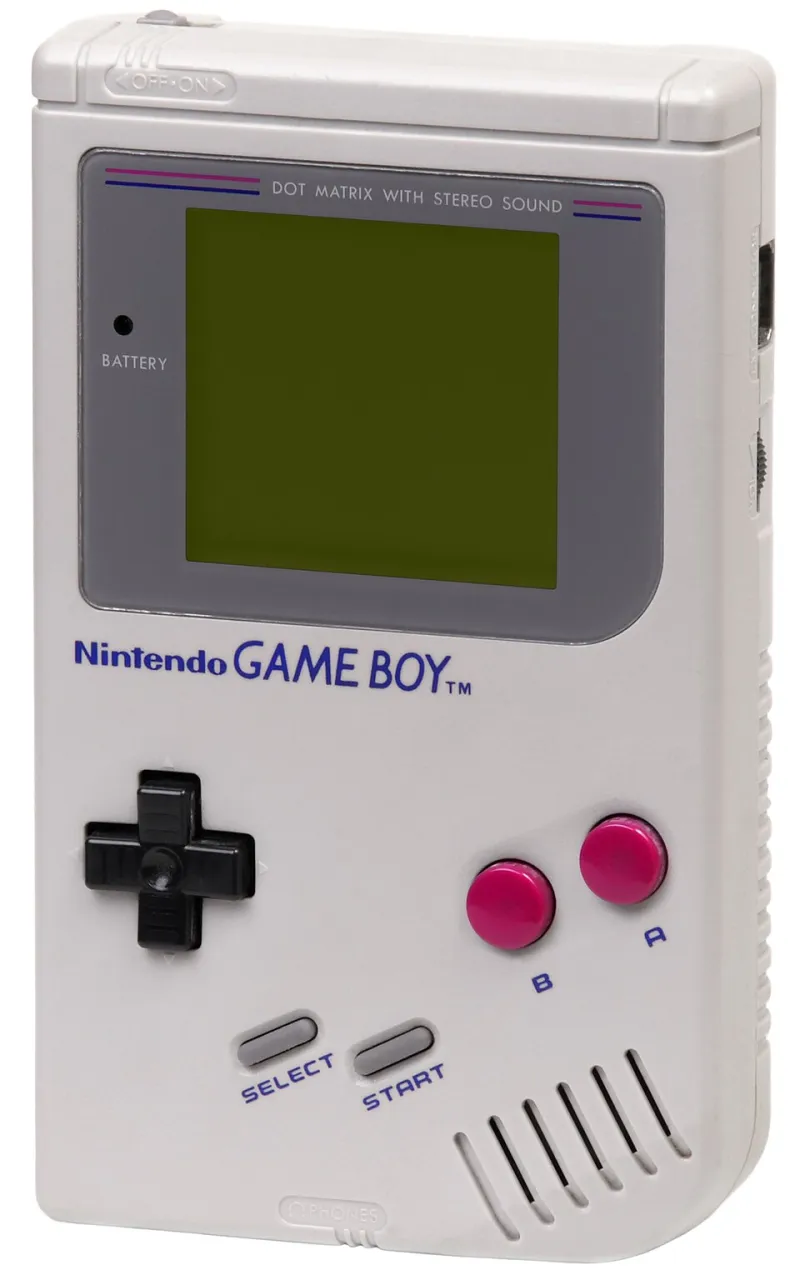
Photo: Ilstrtr75, CC BY-SA 4.0, via Wikimedia Commons
There's a particular kind of silence that followed the Game Over screen on an old CRT television. Not the comfortable pause of a modern checkpoint system gently nudging you back into the action. Not the friendly "Continue?" countdown that felt more like a suggestion than a consequence. Just two words, a blinking cursor, and the slow, sinking realization that everything you'd built over the last forty-five minutes was gone.
No negotiation. No soft landing. Just: done.
We've mostly forgotten what that felt like. And that forgetting might be costing us something real.
The Architecture of Consequence
Retro games — especially the punishing classics of the NES and early arcade era — were built around a fundamentally different relationship with failure. Titles like Ghosts 'n Goblins, Battletoads, and the original Ninja Gaiden didn't treat your death as a minor inconvenience to be smoothed over with a loading screen. They treated it as an event with weight. A real ending to a real attempt.
In those games, consequence wasn't a design flaw. It was the design. Every life lost carried actual cost. Every mistake compounded. And when the final life disappeared and that screen appeared — blocky letters spelling out your defeat — the game wasn't being cruel. It was being honest.
Modern game design has largely moved away from this model, and for understandable reasons. Accessibility matters. Frustration drives players away. Nobody wants to lose a paying customer because a boss fight was tuned too hard. But somewhere in the process of smoothing out the rough edges, something philosophically significant got sanded away too.
Failure as a Genuine Ending
Here's the distinction that gets lost when we talk about failure in games: there's a difference between failure as a learning opportunity and failure as a genuine ending you have to accept.
Modern games are excellent at the first kind. Die, respawn, absorb the lesson, try again. It's essentially a structured feedback loop, and it works. You get better. You progress. The system is optimized for growth, and growth feels good.
But the second kind — the failure you can't immediately undo, the one that actually closes a door — teaches something different entirely. It teaches you that some things don't come back around. That certain moments, once lost, stay lost. That the right response to a genuine ending isn't to immediately reload and retry, but to sit with it, name it, and then decide what to do next.
That's not a gaming skill. That's a life skill. And the old Game Over screen was one of the few places in popular entertainment that actually practiced it.
The Philosophy of the Hard Stop
Stoics like Marcus Aurelius spent considerable energy thinking about acceptance — specifically, the acceptance of things we cannot change. The Stoic framework doesn't ask you to enjoy loss or pretend it didn't hurt. It asks you to recognize what's within your control and release what isn't. A decision already made, a moment already passed, a game already lost: none of these are yours to retrieve.
Classic 8-bit games, probably without meaning to, were running a version of this curriculum.
When you hit Game Over in Mega Man and had to restart from world one, you weren't being punished for the sake of punishment. You were being asked to do something genuinely hard: accept a complete loss, integrate whatever you'd learned, and begin again without the comfort of a safety net. The game wasn't pretending your failure hadn't happened. It was requiring you to carry it forward as information rather than erase it like a mistake on a whiteboard.
There's a meaningful difference between those two postures. One treats failure as temporary noise in an otherwise smooth system. The other treats it as signal — real, permanent, worth reckoning with.
What We Traded Away
The shift toward forgiving game design happened gradually, and again, it wasn't without reason. But look at what we traded.
When failure carries no real cost, accountability softens. When every mistake can be immediately undone, the instinct to sit with discomfort — to actually feel the weight of a bad decision before moving past it — atrophies. We get better at retrying. We get worse at reckoning.
This isn't just a gaming observation. Americans in particular have developed a complicated relationship with failure culture. On one hand, the startup world celebrates "fail fast, fail forward" as a kind of badge. On the other, there's a deep cultural discomfort with failure that actually sticks — the kind that can't be reframed as a learning moment or a pivot opportunity. We're increasingly good at processing failure as a step in a process. We're increasingly bad at processing failure as a stop.
The old Game Over screen understood the difference. It didn't ask you to celebrate the loss or extract a lesson on the spot. It just made the loss real and let you sit there with it.
Starting Over Isn't the Same as Undoing
Here's what's worth holding onto from those old cartridges: starting over and undoing are not the same thing.
When Castlevania sent you back to the beginning, it didn't pretend your failed run hadn't happened. You remembered it. You carried the knowledge of where you'd gone wrong, which rooms had cost you lives, which patterns you'd finally started to read. The loss was permanent. The learning was yours to keep. And the new run began not as a clean slate but as a second attempt informed by a genuine first failure.
That's actually a pretty sophisticated model for how to move through life after something goes wrong. You don't get to undo it. You don't get to reload the save. But you do get to start again, carrying everything you learned from the attempt that didn't make it.
The game was over. You weren't.
The Lesson the Pixels Left Behind
There's something worth recovering from that era of unforgiving design — not the frustration, not the artificial difficulty, but the underlying honesty about what failure sometimes is. Not a detour. Not a tutorial. Sometimes just an ending that has to be named as one before you can genuinely begin something new.
Modern life is full of retry mechanics. We reload, reframe, rebrand, restart. And sometimes that resilience is exactly right. But sometimes what the moment actually calls for is the willingness to let the screen go dark, sit in the quiet for a beat, and understand — really understand — that this particular run is finished.
The 8-bit era knew that. It built it into the hardware.
Maybe we could stand to remember it.