Round and Round: What Endless 8-Bit Cycles Taught Us About Making Peace With Life
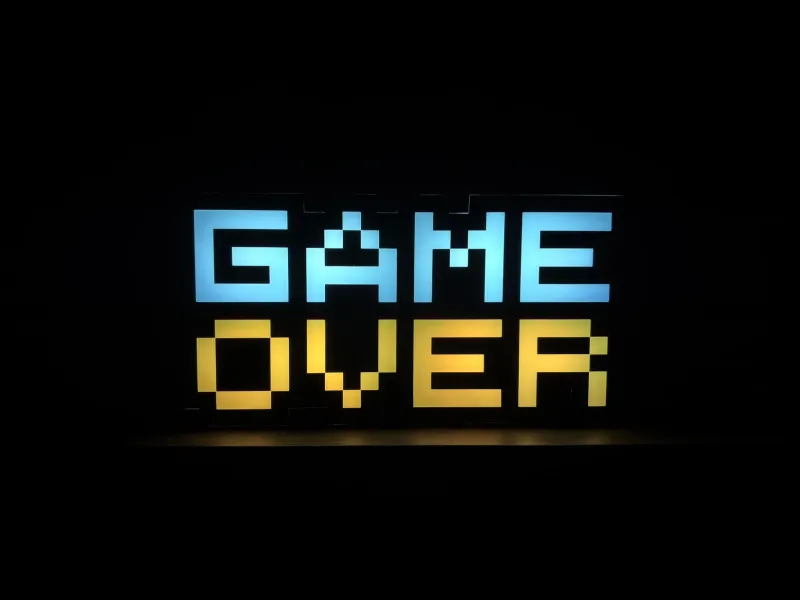
Here's something nobody talks about at the end of a long gaming session: the moment you realized the game was never going to let you win. Not really. Not in the way you wanted.
You cleared the last stage of Pac-Man. The ghosts came back. The dots reappeared. The maze reset. The game didn't congratulate you — it just asked you to do it all over again, slightly faster, slightly meaner. No credits. No cutscene. No sense of arrival. Just the loop, starting fresh, indifferent to everything you'd just accomplished.
For a generation of kids feeding quarters into arcade cabinets or squinting at CRT televisions, this was simply how games worked. Nobody thought much of it. But looking back now, those endless cycles were doing something quietly profound — something that modern gaming, with all its narrative ambition and achievement-point generosity, has almost completely abandoned.
The Loop Was the Point
Most early arcade and NES-era games weren't built around endings. They were built around escalation. Galaga didn't conclude. Donkey Kong didn't hand you a trophy and roll the credits. Centipede didn't resolve its conflict. The design logic was simple: survival as long as possible, then start over. The machine wasn't interested in your closure.
What's fascinating is how naturally players adapted to this framework. You didn't play Tetris to finish Tetris. You played it to see how long you could hold on before the blocks overwhelmed you — and then you played it again. The acceptance of eventual, inevitable failure wasn't a bug in the experience. It was the experience.
There's a word for this in Buddhist philosophy: anicca, or impermanence. The idea that all things arise, persist briefly, and pass away — and that suffering comes not from the passing, but from our resistance to it. Those 8-bit designers probably weren't reading the Pali Canon between coding sessions. But the constraints of the hardware pushed them toward a design philosophy that accidentally mirrored one of humanity's oldest spiritual insights.
What Happens When Every Game Has an Ending
Sometime in the late 1980s and into the 1990s, games started offering conclusions. Bowser fell. Ganon crumbled. The princess was saved. And players loved it — because of course they did. Narrative closure feels good. It's the same reason we binge TV shows and stay up too late finishing novels.
But something shifted in the underlying contract between player and game. Completion became the default expectation. And with that expectation came an entire ecosystem designed to enforce it: achievement systems, trophy notifications, completion percentages, post-game content specifically designed to push that number to 100.
Modern gaming is extraordinarily good at making you feel like you're always moving toward something. There's always another level, another collectible, another story beat waiting just ahead. The industry figured out — correctly — that forward momentum feels rewarding. What it may not have anticipated is what happens to players who can only function inside that system.
Because life doesn't have a completion percentage. Your career doesn't unlock an achievement when you hit a milestone. Your relationships don't display a progress bar. Tuesday doesn't reward you for getting through Monday. The loop just keeps looping.
Acceptance as a Skill We Used to Practice
When you played Space Invaders as a kid, you weren't building toward a win condition. You were practicing something subtler: the ability to engage fully with something that offered no promise of resolution. You got good at the game not because you expected to beat it, but because being good at it was its own reward.
Philosophers like Albert Camus would recognize something in that dynamic. In The Myth of Sisyphus, Camus describes his famous boulder-pusher not as a tragic figure, but as a liberated one — someone who has made peace with his endless, repetitive task. "One must imagine Sisyphus happy," Camus wrote. It sounds absurd until you've spent three hours playing Asteroids and realized, somewhere around the fourteenth wave, that you stopped caring about the score and started just... playing.
That shift — from outcome-focused to process-focused — is something psychologists and philosophers have long identified as central to human flourishing. Mihaly Csikszentmihalyi called it "flow." Stoics called it focusing on what's within your control. Zen practitioners might just call it being present. Whatever the label, 8-bit games were accidentally creating the conditions for it constantly.
The Achievement Trap
None of this is to say that modern gaming is philosophically bankrupt. Some of the most emotionally and intellectually rich experiences in any medium right now are video games. But there's a cost worth examining.
When every action is tracked, every milestone rewarded, and every story arc resolved, players are being trained to expect the world to confirm their progress. And when the real world — reliably, stubbornly — refuses to do that, the dissonance can be genuinely destabilizing. A generation that grew up learning to chase completion percentages may be less equipped to sit with ambiguity, to find meaning in repetition, or to accept that some cycles simply don't end.
The modern gaming industry isn't malicious for building these systems. They respond to what players want. But what players want and what players need philosophically aren't always the same thing.
Learning to Love the Loop Again
There's a reason games like Hades, Dead Cells, and Returnal have struck such a deep cultural nerve in recent years. The roguelike genre — built entirely around repetition, failure, and cyclical progression — has become one of the most critically celebrated spaces in contemporary gaming. Players aren't just tolerating the loop. They're seeking it out.
Maybe that says something about where we are collectively. In a cultural moment defined by anxiety, uncertainty, and the persistent sense that the narrative arc of life isn't bending the way it should, there's something genuinely comforting about a game that looks you in the eye and says: there is no ending. There's just this. Do it again.
The old arcade machines knew something. Not because their designers were philosophers — most were just engineers working within tight constraints. But those constraints produced an honest design, one that reflected the actual texture of human experience more faithfully than any achievement-laden epic ever could.
Life is mostly the loop. The maze resets. The dots come back. The blocks keep falling.
The question isn't how to beat it. The question is whether you can make peace with playing anyway.
Insert coin to continue.