No Credits Screen: What Happens When the Game Refuses to Let You Win
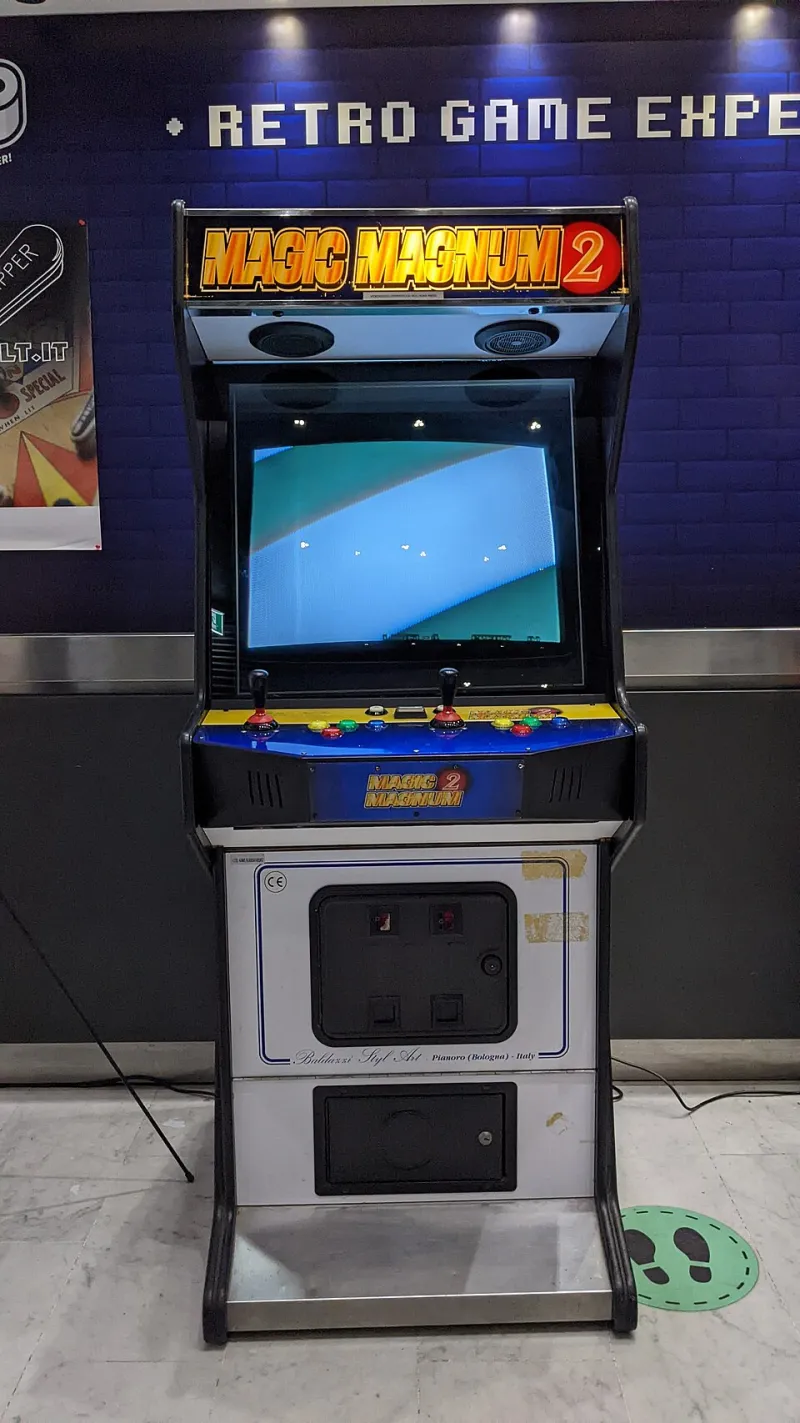
Photo: SunOfErat, CC BY 3.0, via Wikimedia Commons
There's a particular kind of frustration that only retro gamers know. You've cleared the board. You've eaten every dot, blasted every alien column down to its last desperate invader. And then — nothing. The game just resets. The dots come back. The aliens drop lower and faster. The universe, apparently, has no interest in congratulating you.
This wasn't a bug. It was, in a strange and unintentional way, a philosophical statement.
Games like Pac-Man, Space Invaders, Asteroids, and Galaga weren't built around endings. They were built around endurance. The goal wasn't to finish — it was to last. And in designing games that way, those early developers accidentally constructed some of the most honest simulations of human ambition ever made.
The Architecture of the Endless
To understand why this matters, it helps to remember what game design looked like in the late '70s and early '80s. Storage was minimal. Storytelling was almost nonexistent. There were no cutscenes, no final boss monologue, no triumphant score swell as the credits rolled. The technical constraints of the era meant that most arcade titles were structurally incapable of offering a traditional narrative payoff.
So designers leaned into loops. Waves. Escalation. The game didn't end when you succeeded — it responded to your success by getting harder. Space Invaders sped up as you eliminated more aliens. Pac-Man introduced faster ghosts, shorter energizer windows, and eventually the infamous kill screen at level 256. The message embedded in the mechanics was blunt: there is no finish line. There is only the next wave.
For quarters pumped into a machine at the local arcade, that was a reasonable business model. For anyone thinking about it philosophically, it's something closer to a provocation.
What Aristotle Might Say About Your High Score
Aristotle had this concept he called telos — the idea that everything has a natural purpose or endpoint toward which it strives. An acorn's telos is to become an oak. A knife's telos is to cut. By that logic, a game's telos should be to be completed.
But Pac-Man doesn't have a telos. It has a drift. A perpetual motion. And that forces a genuinely uncomfortable question: if the game never ends, what exactly are you playing for?
The answer most players landed on, consciously or not, was the score. The number. The proof that you lasted longer than the person before you — or longer than yourself the previous attempt. The high score table became the only finish line available, and people chased it with the kind of intensity usually reserved for things that actually matter.
Which, if you squint at it sideways, looks a lot like the way we treat career milestones, social media metrics, or net worth.
Hustle Culture's Favorite Game Mechanic
Here's where it gets uncomfortable. The endless loop of the arcade cabinet isn't some relic of a simpler time — it's the operating system of modern American ambition.
Think about the standard life script: get the degree, get the job, get the promotion, get the house, get the bigger house, hit six figures, hit seven. Each milestone cleared just restarts the board at a higher difficulty. There's no credits screen. There's no moment where someone hands you a trophy and says, definitively, you've done it — you can stop now.
We've built an entire culture around the logic of Space Invaders, and we act surprised when people burn out.
The philosopher Albert Camus wrote about Sisyphus — condemned to roll a boulder up a hill for eternity, only to watch it roll back down every time. Camus argued we have to imagine Sisyphus happy, because the struggle itself is where meaning lives. But there's a difference between finding meaning in the process and being unable to recognize when the process has become a trap.
The arcade game, at least, was honest. It never promised you an ending. Hustle culture does — and that's the more dangerous design.
Completion vs. Continuation: The Real Question
There's a philosophical distinction worth sitting with here: completion and continuation are not the same thing, and conflating them causes a specific kind of suffering.
Completion implies a state of wholeness — a thing done, a goal reached, a chapter closed. It carries with it permission to rest, to reflect, to feel satisfied. Continuation is neutral. It just means the next thing follows the previous thing. It carries no inherent meaning and offers no inherent reward.
Early arcade games only offered continuation. Every cleared board was just a doorway to a harder board. Players who understood this — who played for the joy of the run rather than the fantasy of a finish — tended to last longer and enjoy it more. Players who kept waiting for the game to finally acknowledge them usually walked away frustrated.
The same split exists in how people approach work, relationships, creative projects, even fitness. Those who find genuine engagement in the doing tend to sustain it. Those who are purely chasing the moment when it all pays off in some definitive, scoreboard-worthy way often find the payoff hollow — or nonexistent.
What the Kill Screen Actually Teaches Us
Pac-Man's level 256 kill screen is legendary for a reason. After 255 boards of increasing difficulty, a memory overflow corrupts the right half of the screen into a chaotic jumble of symbols. The game becomes literally unplayable. It's not an ending — it's a collapse.
And somehow, that's more honest than most things we're taught about success.
The kill screen says: systems have limits. Escalation cannot continue forever. At some point, the structure that was supposed to sustain the game breaks under its own weight. It's a glitch, sure. But it's also a metaphor that a lot of burned-out professionals in their 40s would recognize immediately.
The game wasn't designed to break you. But it also wasn't designed to save you.
Playing Differently
None of this means that ambition is bad, or that goals are pointless, or that you should just give up and watch the dots respawn indefinitely. What the endless arcade game actually offers — if you're willing to accept it — is a different relationship with achievement.
One where the score matters less than the quality of the run. One where "lasting" is a legitimate form of success. One where you stop waiting for the credits to roll and start paying attention to what's happening right now, on this board, with these lives remaining.
That's not resignation. That's actually pretty close to wisdom.
The 8-bit designers who built those infinite loops weren't philosophers. They were engineers working within constraints, trying to keep players feeding quarters into machines. But they stumbled onto something real: the idea that an experience without a predetermined ending forces you to define what the experience is for.
That's still one of the hardest questions going. And it's still worth asking — even if, or especially because, the game never tells you the answer.