Nowhere Left to Run: What Hard Edges in Retro Games Actually Taught Us About Living Within Limits
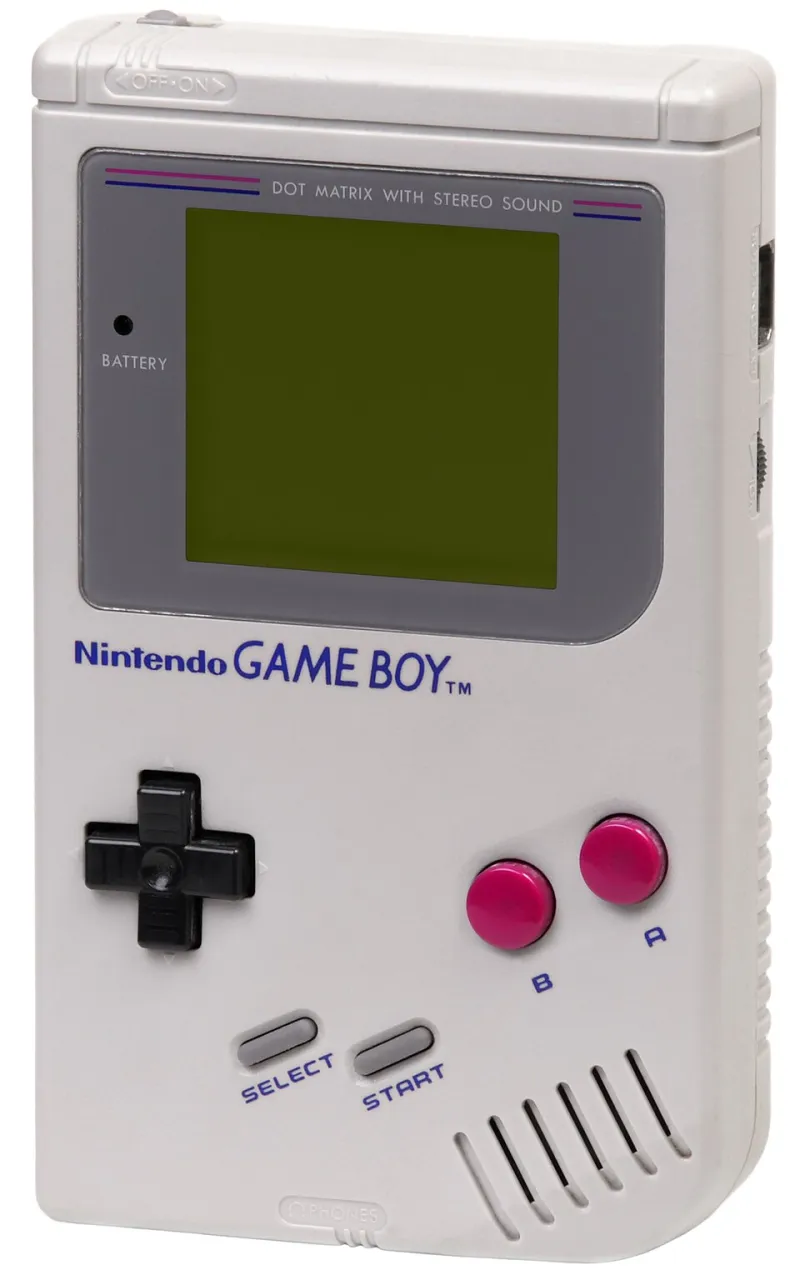
Photo: Evan-Amos, Public domain, via Wikimedia Commons
There's a specific kind of frustration that every kid who grew up with an NES or a Sega Genesis knows in their bones. You're exploring a new map, the music is pumping, you feel like the whole world is yours — and then you hit the edge. Not a cliff. Not a canyon. Just... nothing. An invisible wall. A locked door with no key. A mountain range drawn in the background that you will never, ever reach.
For a split second, it breaks the spell completely.
But here's the thing: you moved on. You turned around, found the actual path, and kept playing. And somehow, without realizing it, you were practicing something philosophers have been arguing about for centuries.
The Architecture of "No"
Retro game designers worked under brutal constraints — limited memory, tiny processors, cartridge sizes that today's smartphones would laugh at. Every boundary in an 8-bit game was a deliberate choice, even when it felt arbitrary. The locked door in the first dungeon wasn't cruelty; it was pacing. The invisible wall at the map's edge wasn't laziness; it was focus. The designers were essentially saying: this is the space where the meaningful stuff happens. Everything outside of it is noise.
Philosophers have a word for this kind of structured limitation: finitude. It's the idea that being a bounded creature — one with real, hard limits — isn't a flaw in the design. It's the design itself. Existentialists like Heidegger argued that humans only start making genuine choices when they reckon with their limits. Without the wall, there's no meaningful direction. Without the edge of the map, every step feels equally pointless.
In other words, the invisible wall wasn't keeping you from the good stuff. It was the good stuff, in disguise.
When Limits Feel Like Betrayal
Of course, that's easy to say in retrospect. In the moment, hitting a limit — in a game or in life — rarely feels like wisdom. It feels like betrayal.
Think about the first time a game's map just... stopped. You'd been moving confidently in one direction, and suddenly the screen refused to scroll any further. Or you found a door in the corner of a dungeon, tried it a hundred times, and eventually accepted it wasn't going anywhere. That acceptance felt like giving up. It felt like admitting the game was bigger than you.
And honestly? That's not far off from how we handle real-world limits. When we run into a financial ceiling, a physical limitation, a relationship that can't become what we imagined — the first instinct is rarely acceptance. It's usually some version of maybe if I try harder, push longer, find the right angle, the wall will move.
Sometimes it does. That's worth acknowledging. Plenty of retro games had secrets behind walls that looked solid — hidden passages, breakable blocks, shortcuts that rewarded persistence. The gaming culture of the '80s and '90s practically ran on the idea that if something looks like a limit, it might just be a puzzle in disguise.
But not every wall was a puzzle. Some walls were just walls.
The Wisdom of the Locked Door
Here's where 8-bit design actually gets philosophically interesting: the best games taught you to read your limits. Over time, a skilled player learned the difference between a wall that would eventually open and one that simply defined the boundary of the world. You stopped wasting energy on the latter and started directing it toward the former.
The Stoics — particularly Marcus Aurelius and Epictetus — built an entire ethical framework around exactly this skill. They called it the dichotomy of control: knowing what's actually within your power versus what isn't, and refusing to squander your attention on the second category. "Make the best use of what is in your power," Epictetus wrote, "and take the rest as it happens."
That's not resignation. That's efficiency. It's the same energy a veteran NES player brings to a new game — not reckless optimism, not defeated passivity, but a calibrated sense of where the real action is.
The locked door you couldn't open in Level 1 wasn't taunting you. It was redirecting you toward the part of the game that was actually ready for you right now. And sometimes, later in the game, you'd come back with the right key — not because you'd been banging on that door the whole time, but because you'd gone off and grown somewhere else first.
The Map Edge as Mirror
There's something almost poetic about the map edge in early games. Walk too far in any direction and the world just stops — sometimes with a hard cutoff, sometimes with a gentle nudge that pushes you back toward the center. The game wasn't embarrassed about it. It didn't pretend the world extended infinitely. It just said: here's where we live. Here's the space we've been given.
That kind of honesty is rarer than it sounds, both in game design and in life. American culture, in particular, has a complicated relationship with limits. The mythology of limitless possibility — the frontier, the bootstraps, the idea that any ceiling can be shattered with enough hustle — is deeply baked in. Admitting that some walls don't move can feel almost un-American.
But the retro games we loved didn't sugarcoat it. They handed you a world with edges and said: work with this. And the players who thrived weren't the ones who kept throwing themselves at the boundary. They were the ones who turned around and built something extraordinary inside the space they actually had.
Playing Better Within the Frame
None of this means we should stop pushing back against unjust limits — the kind that are imposed unfairly, that shrink someone's world through no fault of their own. There's a real difference between a natural constraint and an artificial one, and collapsing that distinction is its own kind of bad philosophy.
But for the limits that are genuinely ours to live with — the ones tied to time, to biology, to circumstance, to the particular shape of the life we've been given — the 8-bit playbook still holds up. Figure out which walls move and which ones don't. Stop exhausting yourself on the ones that don't. And then pour everything you've got into the space that's actually yours to play in.
The game was never infinite. It was never supposed to be. The designers knew what they were doing when they drew the edge of the map.
So did you, the moment you turned around and kept going.